For a generation, Indian luxury hotels were measured by how much they offered. The count of rooms, the number of restaurants, the length of the activity list. That model served its era well. But it also assumed that a guest's greatest need was variety, when what many luxury travellers now lack is something far simpler: time, quiet and attention.
The future of luxury hospitality in India belongs to hotels that slow guests down. Intimate hotels that follow the guest's pace and the destination's own rhythm offer exactly what a long list of facilities cannot. The Postcard Hotel's view is that the hotels which will matter most are those that give guests their time back, through fewer rooms, flexible service and days left deliberately open.
TL;DR - Summary
- What does slow luxury mean? - Slow luxury is a hospitality approach built around fewer rooms, flexible service and unhurried days. Rather than filling a schedule with activities, it returns time and attention to the guest. The Postcard Hotel operates on this principle across its collection.
- Why is this shift happening now? - Luxury travellers increasingly seek rest, privacy and depth over variety. The Global Wellness Institute's 2026 Global Wellness Economy Monitor reported that wellness tourism grew 11.4% from 2024 to 2025, reflecting rising demand for restorative travel.
- What does this look like in practice? - Hotels with fewer than twenty rooms, meals served on the guest's schedule, settings chosen for their landscape or culture, and no fixed itinerary. The Postcard Hotel collection includes properties with as few as nine rooms.
- How should travellers choose? - Count the rooms, read how the hotel describes a day, ask how flexible meals and check in are, and consider fewer nights in more places less often. These signals reveal whether a hotel is built around the guest's time or the hotel's own programme.
WHAT THE OLD MODEL GOT RIGHT AND WHERE IT FALLS SHORT
India's grand luxury hotels were built for a particular kind of travel. Large properties with ballrooms, multiple dining venues, poolside programmes and curated excursion desks suited guests who wanted everything under one roof. For decades, this approach defined what luxury meant in Indian hospitality.
That model deserves respect. It introduced world class service standards to the Indian market and gave travellers confidence that a domestic holiday could rival anything abroad. Many of these hotels remain excellent at what they do.
Where the model falls short is in what it asks of the guest. A property with dozens of facilities and hundreds of rooms creates its own momentum. There are time slots to fill, restaurants to try, activities to schedule. The guest's day begins to revolve around the hotel's programme rather than the guest's own rhythm. For travellers whose daily lives are already overscheduled, this can feel less like rest and more like another calendar to manage.
WHAT LUXURY GUESTS NOW LACK IS NOT THINGS BUT TIME
The shift is visible in the data. The Global Wellness Institute's 2026 Global Wellness Economy Monitor, released in November 2026, reported that wellness tourism grew 11.4% from 2024 to 2025, making it the third fastest growing wellness sector globally. The broader wellness economy reached a record $7.5 trillion in 2025, growing 8.9% year on year. These figures point to a structural change in how people spend on travel: increasingly toward rest, health and restoration rather than spectacle.
In India specifically, the wellness tourism market was valued at approximately USD 28.87 billion in 2025, according to Mordor Intelligence, and is forecast to reach USD 43.76 billion by 2031 at a 7.18% CAGR. IMARC Group's research places India's luxury hotel market at USD 3.3 billion in 2026, growing at 8.48% annually through 2034. The market is expanding, but the nature of demand is changing alongside the numbers.
Outlook Luxe, writing in August 2026, observed that industry forecasts point to slow travel becoming the dominant current in high end tourism, with operators redesigning around longer stays and deliberately empty calendar days. Forbes, in its 2026 travel outlook, noted that travellers are moving away from large resorts in favour of stays that foster real connection and authenticity.
The Postcard Hotel's view is that what luxury guests now lack is not a longer menu of options. It is unstructured time, genuine quiet and the kind of personal attention that only becomes possible when a hotel has few enough guests to know each one.
WHAT SLOWING GUESTS DOWN MEANS IN PRACTICE
Slowing a guest down is not a philosophy printed on a brochure. It is a set of operational choices that shape every hour of a stay.
It begins with scale. A hotel with fewer than twenty rooms cannot hide behind systems. Service becomes personal because there is no alternative. The team knows who arrived late, who prefers coffee at dawn, who would rather read than tour. That knowledge does not require a guest profile or a digital concierge. It requires proximity.
It continues with flexibility. When meals follow the guest's hours rather than a fixed seating, the morning opens up. When check in adjusts to the traveller's journey rather than a standard afternoon slot, the first impression is one of ease, not administration.
It extends to the setting. A hotel chosen for its landscape, its river, its working tea estate or its view of a mountain range gives the guest a reason to stay still. The destination's own rhythm, its light, its seasons, its quiet, becomes the programme. There is nothing to rush toward because the place itself is the point.
And it shows in what is left out. No daily schedule pinned to a noticeboard. No pressure to fill every hour. The guest's day belongs to the guest.
THE POSTCARD HOTEL AS ONE EXPRESSION OF THIS MODEL
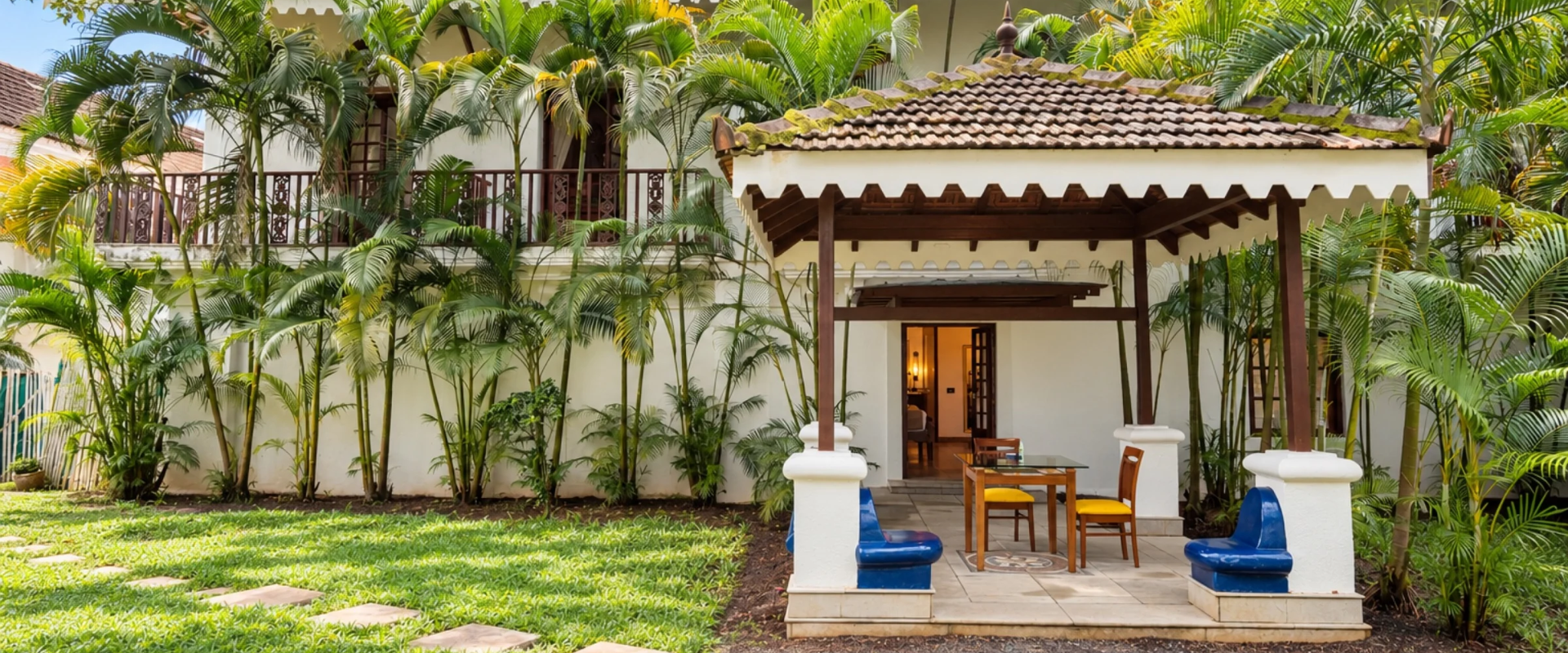
The Postcard Hotel collection operates intimate properties across India and beyond, each shaped by its setting. Four hotels illustrate what this approach looks like in different landscapes.
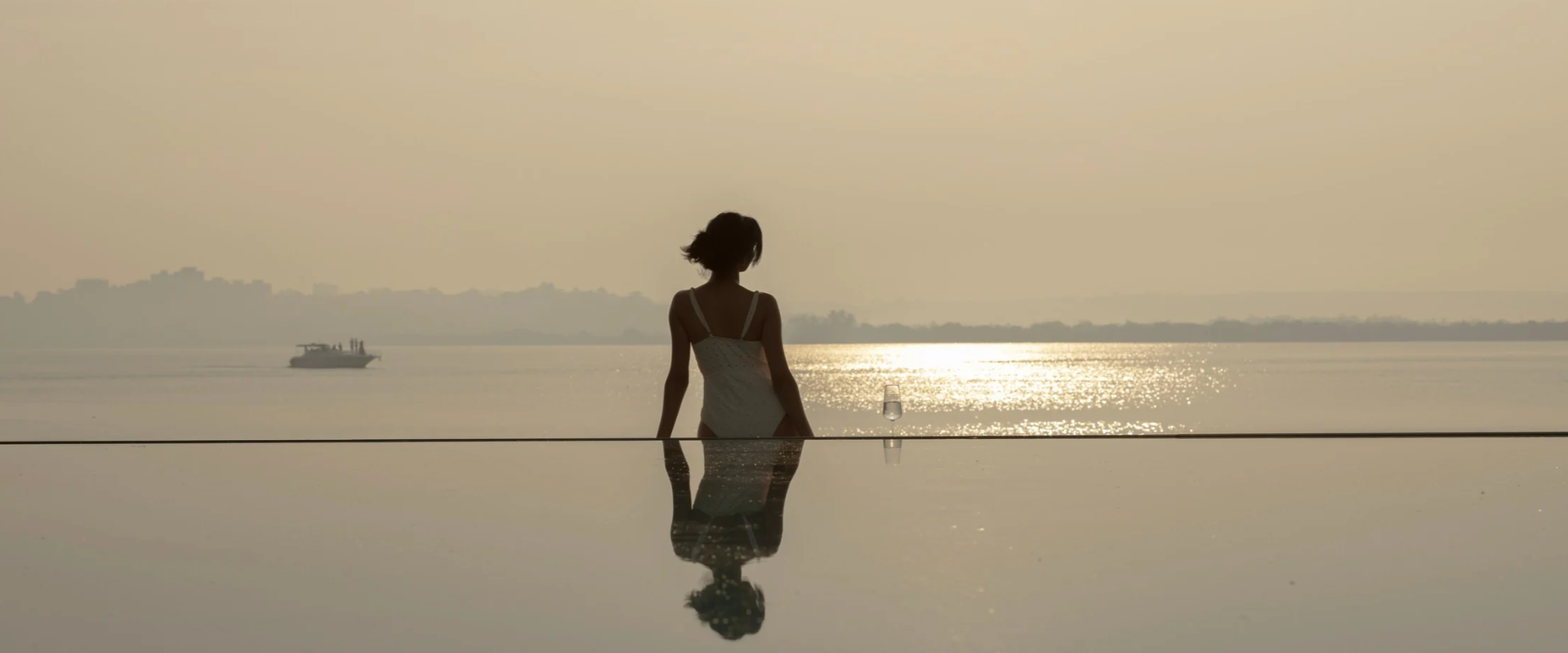
The Postcard on the Arabian Sea, Maravanthe, Karnataka has nine rooms, all facing the ocean. On the Karnataka coast at Maravanthe, the scale is deliberate: few enough guests that the beach, the light and the sound of the water remain undisturbed.
The Postcard Dewa, Thimphu has 13 rooms and two suites in the Khasadrapchu valley by the Wang Chhu river. In Bhutan, the valley's own pace sets the day. The hotel follows it.
The Postcard in the Durrung Tea Estate has twelve rooms on 1,400 acres. A working tea plantation in Assam, where the scale of the land dwarfs the hotel and the guest's world expands without a single scheduled activity.
The Postcard in the Himalayan Willows Leh places a sun parlour in each room, with floor to ceiling windows onto the Stok Ridge. At altitude, the light itself changes the day. The hotel gives guests a place to watch it happen.
Across The Postcard Hotel collection, anytime check in is subject to availability, confirmed at booking and at no additional charge. This is not a perk. It is a reflection of the principle that the guest's journey, not the hotel's shift pattern, sets the clock.
WHAT THIS MEANS FOR TRAVELLERS CHOOSING A HOTEL
For travellers drawn to this kind of stay, a few practical signals help distinguish a hotel built around the guest's time from one built around its own programme.
Count the rooms. A hotel with fewer than twenty rooms operates differently from one with two hundred. Service at that scale is personal by necessity, not by training manual.
Read how the hotel describes a day. If the website leads with a schedule of activities, the hotel is asking the guest to fill time. If it leads with the setting, the food, the light, the hotel is offering time back.
Ask how flexible meals and check in are. A hotel that serves breakfast on the guest's schedule and adjusts arrival to the traveller's journey has made a structural commitment to flexibility, not just a marketing claim.
Consider fewer nights in more places less often. A three night stay at one intimate hotel, experienced slowly, often leaves a deeper impression than a week split across four properties at speed. The Postcard Hotel collection, with properties across Goa, Karnataka, Assam, Ladakh and Bhutan, is designed for exactly this kind of considered, unhurried journey.
Indian luxury hospitality is not short of ambition or investment. What is changing is what guests value most. For a growing number of travellers, the answer is not more. It is less, offered with greater care. The hotels that understand this will shape what luxury means next.
Stay at The Postcard on the Arabian Sea, The Postcard Dewa, Thimphu, The Postcard in the Durrung Tea Estate or The Postcard in the Himalayan Willows, explore The Postcard Hotel, or book your escape.